Music can be found anywhere. From being played in the backdrop of our favorite films, creating an ambiance for our wedding, helping us recover from heartache, to motivating us during our games, music is ubiquitous in our everyday lives. However, did we ever take time to ask ourselves the question—*Why is music important?*
For starters, music is an essential part of humanity. If you’re interested in exploring music more deeply, you can also check out different forms of Indian music that have shaped culture and tradition for centuries. Irrespective of whether one is simply a music lover or a professional performer, music has a significant impact on our day-to-day lives, often in subtle yet profound ways.
Here, I discuss some of the most interesting facts and scientific explanations about music’s importance.
Music and Mental Health: How It Heals the Mind

Another highly significant reason music plays a crucial role in human life is its strong link to mental health. Living under high stress levels is a reality for many individuals, and hence music provides a good mechanism. Similarly, activities like dance for mental health also play a powerful role in reducing stress and improving emotional well-being.
First, music has been found to help decrease the levels of stress hormones like cortisol. For example, when an individual puts on music in order to relax himself/herself, he/she automatically works towards decreasing his/her stress levels. It is for this reason that music is often used in hospitals to alleviate stress in patients.
Second, listening to music gives people a chance to release their inner emotions and get relief from them. Certain songs will enable the listener to identify with whatever he/she is going through at a particular time in his/her life.
Apart from stress relief, music has also been proven to alleviate symptoms of anxiety and depression. Listening to positive music leads to the secretion of serotonin and dopamine, which are brain chemicals that give that good feeling.
To individuals who have suffered any form of trauma or mental disorder, music provides a means of expressing themselves without having to talk about anything at all because the pain or complexity associated with it cannot be expressed in words. Music is more than just a mood enhancer. For those looking to experience these benefits firsthand, enrolling in music classes can be a great way to improve both mental and emotional health.
The Science Behind Music: What Happens in Your Brain

To really appreciate the importance of music, it is necessary to see what impact it makes on our brains. Understanding how sound works also involves learning about different music instruments and how they influence tone, rhythm, and brain response.
In fact, when listening to music, not only is the sound processed by our brains, but our entire brain is activated in an unparalleled way. Brain scans have proven that the processing of musical notes involves nearly all brain regions, including the ones linked to movement, language, feelings, and memory.
How Music Triggers Dopamine Release
One of the most groundbreaking findings in the field of music neuroscience is the revelation that listening to music increases dopamine production – the neurotransmitter responsible for our sense of happiness. This explains why a well-chosen piece of music can provide goosebumps and cause palpitations in the chest area.
Studies done by scientists from McGill University have revealed that our brain produces dopamine not only during exposure to a musical climax but also in anticipation of it. Thus, listening to music is an activity that literally pays off because it involves stimulation of the brain’s reward centers. Music stands out among the few non-necessities that induce such strong activity in this region of the brain. The dopamine response is also the reason behind the addictive nature of music in the best sense of the term.
Music and Memory: Why Old Songs Feel So Familiar
Do you recall listening to a song from your childhood and suddenly being brought back into the past? That happens because our brains are wired to associate music with memories.
Music is processed in the hippocampus, the memory center of our brain, as well as in the amygdala, where we process emotions. The brain stores memories about music associated with some emotional event extremely clearly, which explains why you still recall music from ten years ago with great vividness and emotionality.
That’s also why music is the last thing to be erased by Alzheimer’s disease; even when the patient forgets the faces of his relatives, he can still sing songs he knew decades ago. This strong association between music and memories is the basis of success in music therapy for dementia patients.
Music is a full brain exercise; it stimulates our brain in various ways by increasing dopamine levels, improving memory, and activating the emotional areas of our brain.
Music as a Universal Language

Among many factors that make music an indispensable element in our lives, the most enchanting one, in my opinion, lies in the very nature of this art – every person on Earth understands music. Irrespective of your place of birth, native tongue, cultural heritage, or social background, music speaks for itself. Whether it is sorrow, joy, anger, or passion that it conveys, none of these moods needs to be explained verbally because music serves as the only language universally understood by people. In other words, music represents the most universal form of communication. This universal connection is also seen in performing arts like dance, where different styles express emotions—explore more in the importance of dance.
Do you think that the performance of flamenco will not move you, even if you cannot comprehend Spanish? What about a Japanese folk tune? Will it fail to evoke any feelings? Music speaks about your soul, and the messages delivered in it do not require any interpretation at all. Even more interestingly, certain emotions conveyed through musical means turn out to be understandable cross-culturally.
For example, a scientific paper published in the *Proceedings of the National Academy of Sciences* revealed that representatives of remote cultures who were unaware of Western music were capable of identifying such emotions as joy, sadness, and anger.
This universality ensures that music becomes the only connection point for individuals who might not find any other similarity to relate to each other on their own terms. In a world full of conflicts and differences, music makes us remember our human nature and the emotions that unite us. Music does not know language, culture, or geography. It is the only language that everyone understands, and that makes it the world’s most universal language.
Why Music Is Important for Children’s Development
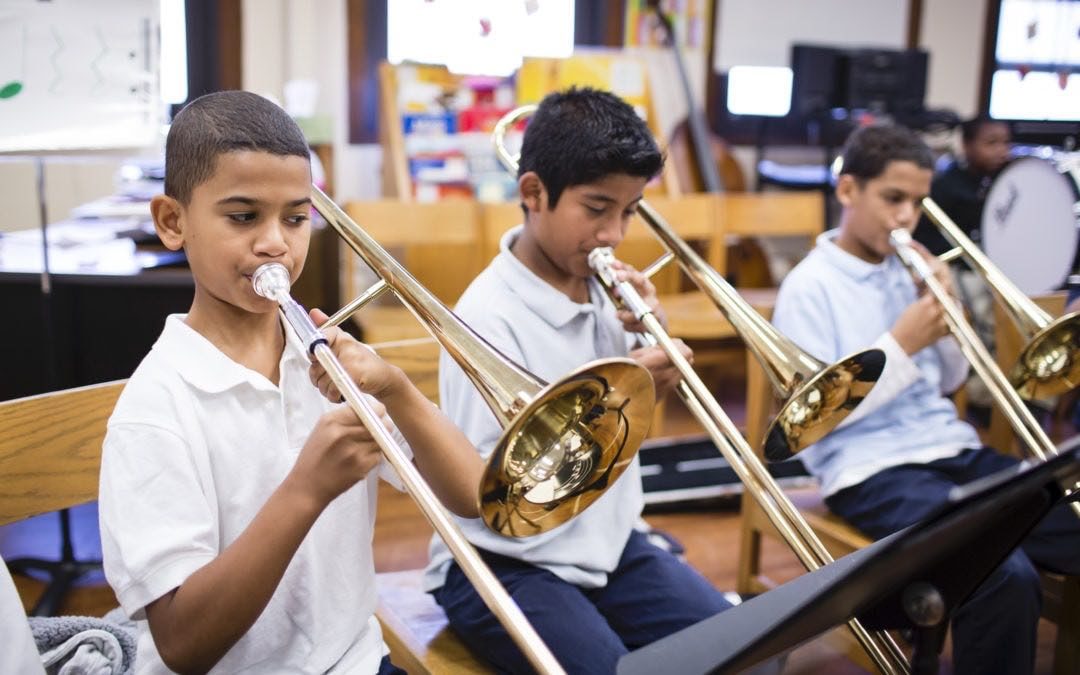
To see the significance of music at an early stage of life, just take a look at what music does for kids. The advantages that music can give to child development are amazing. Parents can support this growth by enrolling their kids in children’s music classes, which help build creativity and cognitive skills early on.
According to research, babies inside the womb react to music as young as 16 weeks old. Babies of mothers who listened to music in their womb are calmer and more responsive after birth. It is not only because music helps in shaping the brain, but also because it helps the mind become more receptive to sounds and rhythms.
Babies who grow up listening to music tend to develop faster when it comes to language skills. Nursery rhymes and songs are especially effective in giving a baby a chance to hear rhythm and sounds.
Music is not only crucial to the intellectual development of children but also to their socialization process and learning to regulate their emotions as well. According to various studies, students who study music perform better academically. Similarly, structured programs like children’s dance classes also contribute to better focus and discipline.
Learning an instrument, however, is not the only benefit one can obtain by taking music lessons. It fosters qualities such as patience, dedication, focus, persistence, etc., which are crucial skills that people need throughout their lives. Additionally, group activities help children learn how to work together and listen to others.
Finally, music teaches children to deal with their emotions and express themselves creatively. Indeed, according to research on the effects of music, children who receive musical education early in their lives develop emotional intelligence better than those who do not. Music plays an instrumental role in the developmental process of children. Whether it is developing the brain or improving language skills, or helping emotionally or in academics, music contributes to developing better individuals.
The Role of Music in Social Bonding

People are inherently social beings, and throughout human history, music has played a key role in how people interact with one another. Indeed, one of the most crucial yet neglected aspects of the importance of music lies in the tremendous potential for social bonding that music offers.
Music is a uniquely communal activity. Group activities such as dance team-building activities further strengthen this sense of unity and collaboration. Music is central to all major social practices, including marriages, funeral services, religious observances, national events, and cultural festivals.
Indeed, when individuals come together through music, either in performance or enjoyment, an amazing phenomenon occurs: synchronization. Numerous studies indicate that when individuals partake in music creation, their physiological responses, such as heartbeat, respiration rate, and even brain waves, tend to harmonize with one another.
This is why concerts and live music events are such powerful experiences. You can also explore live performances and cultural events through dance shows in Chicago, which bring communities together. For a few hours, differences in background, politics, or beliefs fade away, and people are united by nothing more than the music.
Music also strengthens personal relationships. A shared love of music is one of the most common ways people bond, whether it’s a couple who share a “song,” a group of friends defined by a genre they all love, or a parent and child who bond over the same artist.
Across generations and across borders, music creates bridges between people. It gives communities a shared identity and a shared voice. It allows people to express collective joy, grief, resistance, or hope in a way that spoken words alone cannot.
Music is a social glue. It brings people together, creates shared experiences, builds communities, and strengthens relationships — making it one of the most important forces for human connection we have.
Music Therapy: Healing Through Sound

Music therapy provides a perfect example. Alongside music, movement-based therapies like dance are also effective—learn more about dance for mental health. This method is widely applied in various hospitals, clinics, nursing homes, and educational institutions all over the world.
Its efficacy has already been proven in many different ways. Patients who have undergone surgery or suffer from certain diseases report decreased sensitivity to pain while under the influence of music. It helps cardiac patients lower both blood pressure and heart rate. Stroke survivors are able to speak and perform motor tasks thanks to music-induced activation of different neural pathways. Dementia sufferers become less irritated and can access their emotions and memories again.
Anxiety, depression, and PTSD patients will find it particularly useful because music therapy is an effective non-medication treatment approach for all three conditions. The method allows experiencing a traumatic situation without putting anything into words, creating a safer environment to go through one’s emotions. For those suffering from PTSD, music therapy is considered one of the most efficient ways of coping with flashbacks, nightmares, and numbness. Another common application of music therapy can be observed among children with autism spectrum disorder. Music therapy helps children develop speech skills, better relate to others, and learn how to control their emotions.
The most amazing thing about music therapy is its versatility in terms of application, age, and ability. You do not have to know how to play music, nor do you have to communicate verbally, as music therapy has been used even with individuals who were in a coma. Music touches areas in the brain and soul that no other form of therapy can access. Music therapy is a clinically based and scientifically proven treatment method that promotes physical and psychological well-being. From pain relief to stroke rehabilitation and mental health disorders, there is nothing that music cannot help heal.
The Cultural and Historical Importance of Music

In order to truly understand the importance of music in our lives, we have to examine its history and the impact it has had on humans all throughout their existence. Music is not something that developed recently, nor is it a luxury. It is, rather, one of the oldest forms of expression of our civilization, something which played a vital role in shaping human civilizations throughout millennia. The evidence found by archaeologists shows us that people have been using music as far back as 40,000 years ago. Bone flutes have been uncovered in many European caves, implying that our ancestors were already creating music despite the lack of more sophisticated technology, agriculture, or writing.
Music has always played a vital part in human life, from birth celebrations to death ceremonies and everything else in between. In fact, no other form of human expression is shared by all human civilizations, whether they be old or recent, isolated, or otherwise, a fact which clearly speaks to the necessity of music in our lives.
Moreover, music has been a strong medium for cultural identity and preservation. The traditional music holds the cultural history, heritage, and values that belong to a certain culture. Through folk songs, chantings, hymns, and ballads, cultures have managed to preserve their memories. Traditional art forms like the history of Bharatanatyam showcase how music and dance preserve cultural identity across generations.
Music is an ancient art form that dates back to the beginning of time itself and has also helped to mold societies, preserve history, spark social changes, and express the human experience throughout time. Music defines man.