Music has been present in human civilization since its origin. Music is part of every aspect of our lives, whether you tap your foot to the beat of a song, hum a tune, or play music by using any musical instrument. Every beautiful piece of music requires an instrument to produce sound.
This article will cover all essential information related to music instruments, including the history of music instruments, types of musical instruments, and how learning music through professional music classes can enhance your skills. The most common music instruments in the world, and where to purchase them.
What Are Music Instruments?
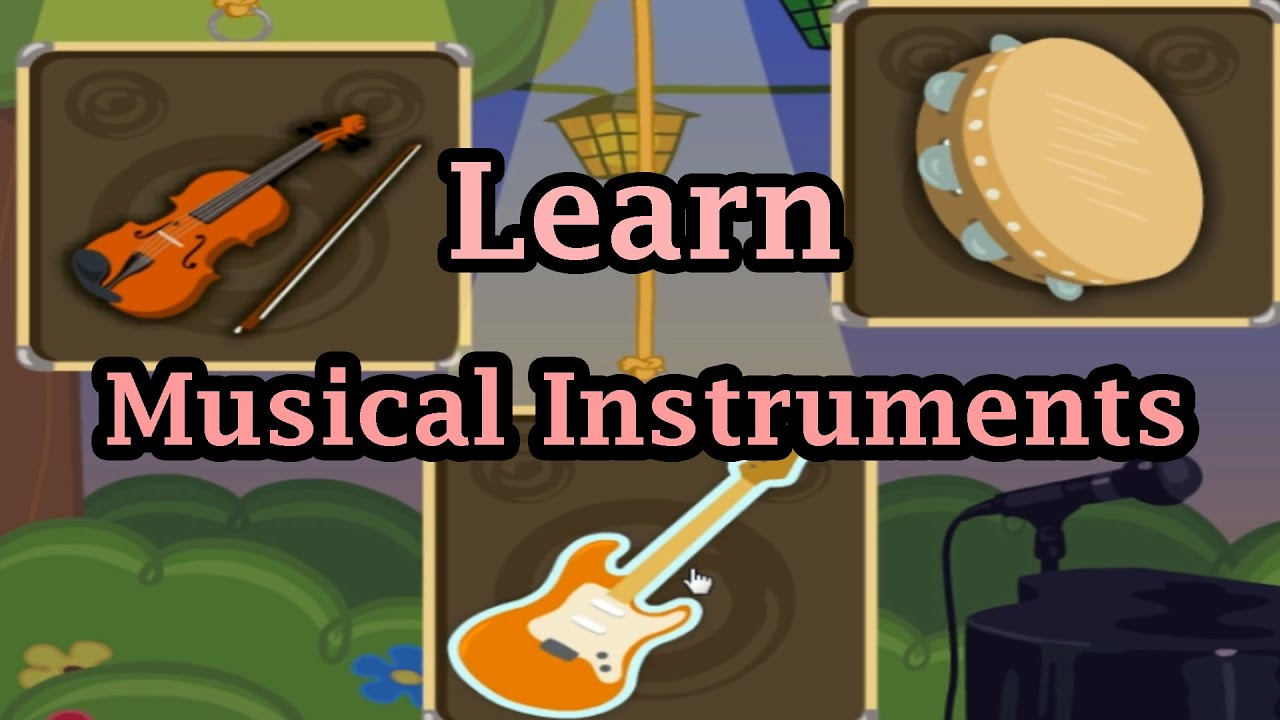
Music instrument refers to an object that is designed for creating sounds in order to make music. From a simple wooden drum to a sophisticated electronic synthesizer, every musical instrument serves only one basic purpose: producing sound. Music instruments can be classified according to the method of playing: either striking, plucking, blowing, bowing, or pressing the keys. There is a diverse variety of instruments, and each nation has its own typical instruments. For both experienced musicians and beginners or parents trying to choose a good instrument for their children, enrolling in children’s music classes or adult music classes can be a great starting point. It is necessary to have some information about musical instruments.
A Brief History of Musical Instruments
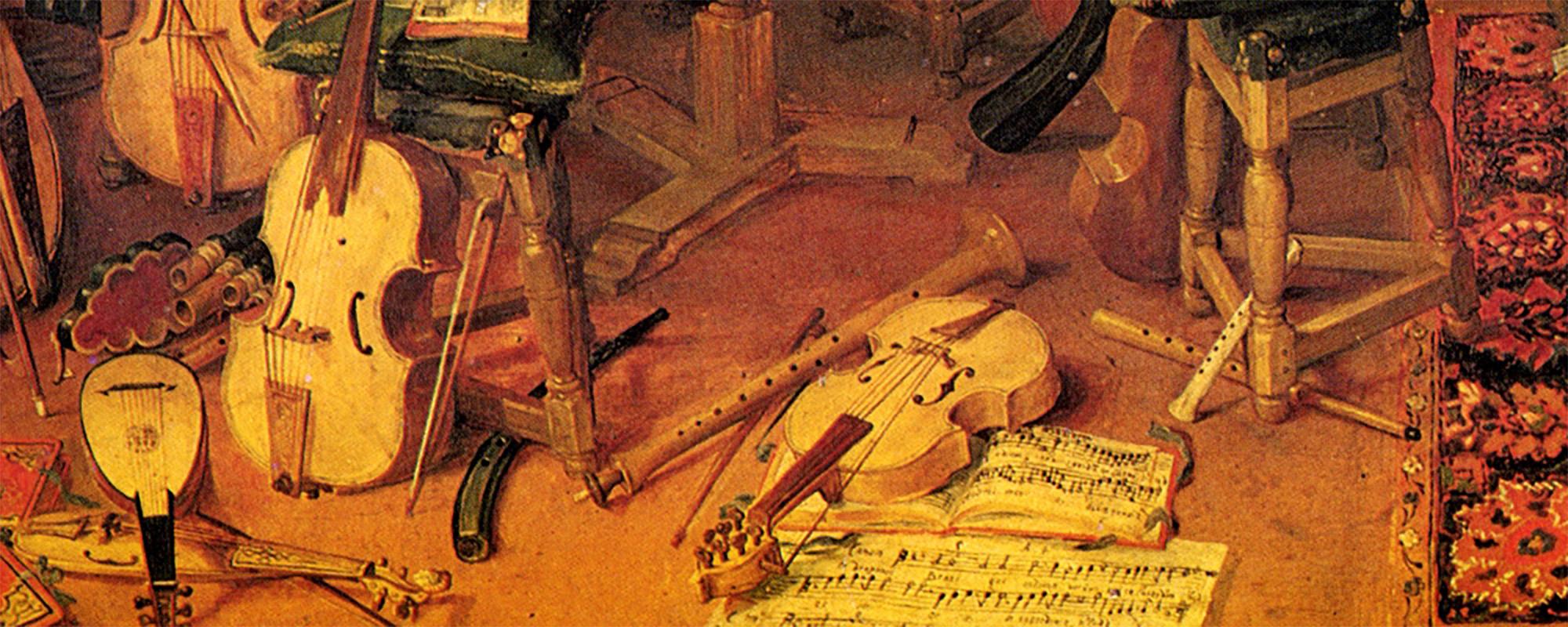
The history of musical instruments goes hand in hand with human civilization. Let us take a brief look at some of the major periods of musical instruments throughout history:
Prehistoric Era (Before 3000 BC)
Some of the earliest forms of musical instruments are percussion tools. Bones, stones, and even empty logs formed musical instruments for the production of rhythmic sound effects. The oldest known flute was made out of a vulture bone, dating back to over 40,000 years ago. This indicates the deep link of humanity with music.
Civilizations of Antiquity (3000 BC – 500 AD)
The Egyptians played harps and lutes. The Greeks invented lyres and other types of wind instruments. Ancient Indians created the veena and tabla, which are still played today. The Chinese developed their set of classical instruments as well.
Medieval Era (500-1400 AD)
During this era, music had a religious or royal context, and instruments such as the lute, harp, and organ were commonly found in churches and royal courts.
Renaissance and Baroque Period (1400-1750 AD)
The most notable feature of this era was the rapid evolution of instrument design. The violin family emerged from Italy, while the harpsichord rose in popularity. Composers such as Bach and Handel pioneered the writing of new musical compositions.
Modern Era (1800-present)
The industrialization period brought significant developments in instrument production, making them more readily available to people and cheaper due to increased accessibility. The piano became common in households, the trumpet and trombone improved, and finally, the invention of the electric guitar and synthesizer marked a shift in music composition towards the end of the 20th century.
Many classical instruments are still used in traditional performances today, especially in classical dance forms discussed in the history of Bharatanatyam.
Types of Musical Instruments

Music instruments are classified into five main categories based on how they produce sound. If you’re interested in learning any of these instruments, structured music classes can help you progress faster with expert guidance.
1. String Instruments
The vibration of strings results in the production of sound in string instruments. String instruments can be strummed, plucked, and hit to generate different pitches and tones.
The mechanics: When a string vibrates, vibrations are created in the form of sound waves, which pass through the body of the instrument before being heard by an audience.
Some popular string instruments include: Guitar, Violin, Cello, Harp, Ukulele, Sitar, Banjo, and Mandolin
Most suited for: Classical music, Folk music, Rock music, Blues, Jazz, and Pop
String instruments can be used to play virtually any kind of music worldwide, and they are often taught in structured programs like music classes for beginners and professionals.
2. Wind Instruments
In wind instruments, sound is produced by blowing air into the instrument. Wind instruments are categorized into two types of subfamilies – woodwinds and brass instruments.
Woodwind instruments include flute, clarinet, oboe, saxophone, and bassoon. Initially, wooden reeds were used to create sounds from woodwind instruments, but now most of them have been replaced by synthetic reeds.
Brass instruments include trumpet, trombone, French horn, and tuba. These instruments are constructed using metals and create sound by vibrating the lips of the player on the mouthpiece.
Suitable for: Classical orchestra, jazz band, marching band, and military music
Learning to play wind instruments takes great effort and practice, but they can be quite exciting for players to learn.
3. Percussion Instruments
Percussion instruments make sounds through being hit, shaken, or rubbed. Percussion is fundamental to the creation of rhythmic music in virtually all styles.
Categories of percussion instruments:
Melodic percussion instruments (make distinct tones) – xylophone, marimba, timpani
Non-melodic percussion instruments (create rhythms rather than specific tones) – snare drum, bass drum, cymbal, tambourine
Examples include: drums, tabla, djembe, bongo, maracas, triangle, xylophone
Suitable for: jazz, rock, pop, classical, Latin music, and world music
The percussion section usually provides the pulse of any music composition. Most forms of music cannot exist without them, and they are one of the simplest instruments for a beginner to learn.
4. Keyboard Instruments
Keyboards have notes that are laid out in a certain manner to be played on their keys. There is an apparatus in each key responsible for producing sounds either by plucking the strings, pushing air into the pipes, or by electronic impulses.
Examples include: Piano, organ, harpsichord, synthesizer, accordion, digital keyboards
Suitable for: Classical, gospel, popular music, jazz, movies, church music
The piano is one of the best-known keyboard instruments and can be said to be the basis of Western music. Beginners should learn piano, especially through guided adult music classes or beginner-friendly programs.
5. Electronic Instruments
Electro Instruments produce sound by means of electronic circuits and mechanisms. These instruments came into prominence in the middle of the 20th century, revolutionizing the entire process of music composition.
Examples include: Electric guitar, synthesizer, drum machine, MIDI controller, theremin, electric bass
Good for: Popular, rock, electronic, hip-hop, and film music composition
An advantage of electronic instruments is their ability to produce an endless variety of sounds. For instance, a synthesizer can produce hundreds of various sounds, or even invent new sounds that do not exist at all.
Most Popular Music Instruments in the World

Guitar – The King of String Instruments
Undoubtedly, the guitar is the most played musical instrument around the globe. There are more than a billion guitars available globally, playing music in almost every genre across different countries.
Types of guitars:
Acoustic guitar – does not require any electrical support; produces a warm, rich tone
Electric guitar – connected to an amplifier, popularly used in rock music
Classical guitar – uses nylon strings; commonly used in classical and flamenco music
Bass guitar – provides a deep sound; plays bass lines in music
Reasons for its popularity: Easy to play, inexpensive, portable, and very versatile. From playing campfire music to performing guitar solos, it can do everything.
Great guitarist names: Jimi Hendrix, Eric Clapton, Carlos Santana, Ed Sheeran, John Mayer
Piano – A Classic for All Ages
Over the last 300 years, the piano has played an integral part in Western music history. Created in Italy during the early 1700s by Bartolomeo Cristofori, the piano soon became the most significant instrument in classical music compositions.
Types of pianos:
Grand piano – large and used in concert halls
Upright piano – small, often found in homes and schools
Digital piano – a modern electric variant that is cheaper and easier to move around
Keyboard – a smaller and lighter alternative, mainly for beginners
Reasons why people like it: Learning how to play the piano can teach you a lot about music theory because you can learn melody, harmony, and rhythm simultaneously when playing it. Furthermore, the piano can be learned by anyone regardless of age.
Popular pianists: Ludwig van Beethoven, Frédéric Chopin, Mozart, Elton John, Alicia Keys
Violin – The Soul of Classical Music
The violin is among the most expressive and soulful musical instruments ever invented. This is a stringed instrument that uses a bow to produce sounds ranging from melancholic to jubilant.
In classical orchestras, the violin is the lead instrument and is also widely used in folk, country, jazz (also known as the fiddle), pop, and even electronic music.
Why do we love it? This instrument has a vast emotional spectrum and an exceptional ability to touch emotions. A proficient violin player will make you either laugh, cry, or get goosebumps!
Notable violinists: Itzhak Perlman, Niccolò Paganini, Hilary Hahn, Lindsey Stirling
Drums – The Heartbeat of Every Band
Drums have existed longer than any other musical instrument, having been used in every culture around the world since the beginning of recorded history – whether it’s the djembe in Africa or the tabla in India, the traditional drums in Western music are referred to as “drum kits.”
In contemporary music, the drum kit (aka drum set) forms the core of every ensemble. This percussion instrument consists of several elements, such as a bass drum, snare drum, hi-hat, cymbals, and tom-toms, all performed at once by the drummer with both hands and feet.
What makes it popular: Drums are very physical and rhythmic instruments that can help channel a person’s energy and relieve stress.
Some famous drummers include John Bonham, Led Zeppelin; Ringo Starr, The Beatles; Dave Grohl; and Neil Peart
Flute – The Voice of the Wind
The flute has been around for tens of thousands of years, which makes it the most ancient of instruments. Today’s concert flute is a finely crafted metal instrument with a beautiful sound.
Being an essential component of the woodwind group, flutes are widely used not only in orchestral ensembles but also in chamber music, folk ensembles, and even in movies. Bansuri is a popular flute among South Asian cultures.
Why do people like the flute? Its lightweight design and the ability to produce a special sound make this instrument unique and appealing. Moreover, practicing flute helps build up lung capacity and control breathing.
Notable musicians: James Galway, Hariprasad Chaurasia, Ian Anderson (Jethro Tull)
Music Instruments for Kids – Best Picks for Young Learners

Introducing children to music at an early age has tremendous benefits, and enrolling them in children’s music classes can significantly boost their creativity and learning abilities. But choosing the right instrument for a child is important.
Here are the best music instruments for kids based on age and ease of learning:
Ages 3–5:
- Xylophone / Glockenspiel – Colorful, easy to hit, teaches basic notes
- Tambourine – Simple shaking and hitting, great for rhythm development
- Mini keyboard – Introduces melody in a fun, visual way
Ages 6–9:
- Ukulele – Small, soft strings, easy chords, and very beginner-friendly
- Recorder – Affordable, commonly taught in schools, great introduction to wind instruments
- Drums / Bongo – Perfect for energetic kids who love rhythm
Ages 10 and above:
- Guitar – One of the best instruments for tweens and teens
- Piano / Keyboard – Great foundation for all of music theory
- Violin – Challenging but incredibly rewarding at this age
Tips for parents:
- Let the child choose an instrument they are genuinely interested in
- Start with group lessons or online lessons before investing in expensive instruments
- Be patient — learning an instrument takes time and consistent practice
- Celebrate small wins to keep the child motivated
Traditional vs. Modern Music Instruments
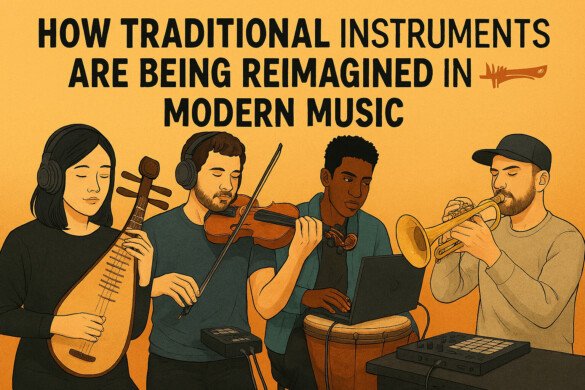
Music instruments have evolved dramatically over the centuries. Understanding the difference between traditional and modern instruments helps us appreciate the rich diversity of music across the world.
Traditional Music Instruments: Traditional instruments are deeply rooted in culture and history. They are often handmade using natural materials like wood, animal skin, bamboo, and metal. Examples include:
- Sitar (India) – A plucked string instrument with a rich, complex tone
- Tabla (India/Pakistan) – A pair of hand drums central to classical South Asian music
- Oud (Middle East) – An ancient lute-like instrument with a deep, warm tone
- Didgeridoo (Australia) – A wind instrument made from eucalyptus wood
- Kora (West Africa) – A 21-string instrument that combines features of a lute and a harp
Traditional instruments carry the soul of their culture. They are often passed down through generations and are central to cultural ceremonies, festivals, and storytelling.
Modern Music Instruments Modern instruments are shaped by technology, innovation, and the demands of contemporary music. Examples include:
- Electric guitar – Transformed rock and pop music in the 20th century
- Synthesizer – Can produce virtually any sound imaginable
- Digital drum pads – Allow drummers to play silently using headphones
- MIDI controllers – Allow musicians to control entire digital studios with one device
- Looping pedals – Allow solo artists to layer sounds in real time
Can traditional and modern coexist? Absolutely. Many modern artists blend traditional and electronic instruments beautifully. Artists like A.R. Rahman have famously combined Indian classical instruments with Western orchestration and electronic production to create iconic soundscapes. To understand how traditional music styles influence modern compositions, you can explore different forms of Indian music.
Where to Buy Music Instruments – Online vs. Local Stores

Once you’ve decided on an instrument, the next question is — where do you buy it? Both online and local stores have their advantages and disadvantages.
Buying Online
Online platforms offer a massive selection of instruments at competitive prices, often with customer reviews to help you make decisions.
Advantages:
- Wider selection of brands and models
- Often cheaper due to lower overhead costs
- Easy price comparison across multiple sellers
- Convenient home delivery
- Access to rare or imported instruments
Disadvantages:
- You cannot try the instrument before buying
- Risk of damage during shipping
- Returns and exchanges can be complicated
- Harder to get personalized advice
Popular online platforms: Amazon, eBay, Thomann, Guitar Center (online), Sweetwater, Daraz (for Pakistan)