Indian Classical Dance is one of the oldest forms of art, one of the most spiritually enriching, and one of the most marvelous looking. Indian classical dance is not only a form of performance art, but a language of the whole spirit, a bridge between the human and the divine, and one of the most extraordinary cultural gifts of humankind, having a history that goes back thousands of years, with its roots in the sacred traditions of the temples and the philosophical texts that predate most of the great civilizations of the world.
Precise and geometric in its footwork, Bharatanatyam is, in contrast, graceful and swaying in Mohiniyattam, dramatic in its face and expression, Kathakali, devotional in its poetry, Manipuri, with human expression and divine grace in the struggle.
For thousands of years, these stories have been communicated through movement, from teacher to student in an unbroken chain of performers, linking the dancers of today with the dancers of ancient temples.
In this comprehensive guide on Indian classical dance, all you need to learn about this amazing tradition will be covered. This includes everything from what Indian classical dance is and its history to the eight styles of Indian classical dance, which have been certified by the National Academy of Arts in India, the magnificent costumes and makeup used for the eight different styles of Indian classical dance, and much more.
So, whether you are an eager beginner looking to learn something new, a student studying Indian classical dance, or even thinking about taking up Indian classical dance, you’ll find everything you need right here.
What Is Indian Classical Dance? A Complete Overview
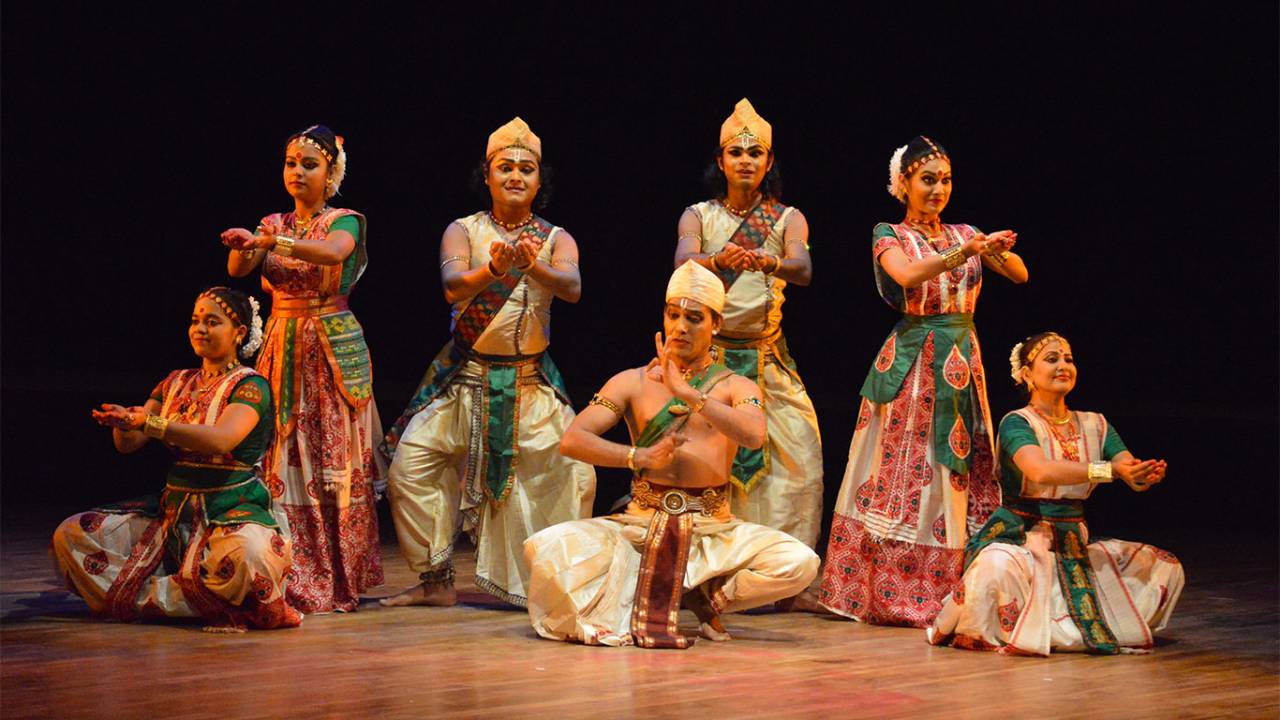
Indian classical dances are a genre of performance art derived from the age-old Hindu theatre music tradition detailed in the Natya Shastra, an ancient Sanskrit text on performance arts written by the sage Bharata Muni, which dates back to somewhere between 200 BC and 200 AD.
The Natya Shastra is considered to be one of the most encyclopaedic works ever written on the subject of performance art and encompasses virtually every facet of it, from stage techniques and costumes to gestures and expressions, and even metaphysical principles underlying aesthetic enjoyment. The Natya Shastra remains to date the primary basis of theory behind all Indian classical dances.
What makes Indian classical dances unique from any other dances performed anywhere else in the world is the exceptional combination of the three key components – Nritta (pure technique of dancing), Nritya (expression of dance conveying sentiments and narrations), and Natya (dramatics of dance).
The very essence of Indian classical dances is the use of Abhinaya, which is the technique of expression. In Indian classical dances, the dancers do not only express their messages through body movement and footsteps; rather, the performers utilize an extremely advanced method of facial expression (Bhava), hand gesture (Mudras), eye movement (Dristi), and body posture (Angika).
An accomplished classical dancer can perform an entire story without saying anything – whether it is the love of the devotee towards God or the happiness of a bride before marriage, the anger of a soldier going to war.
There can be no separation between the spiritual element of Indian classical dance and the artistic element of Indian classical dance. This is because, within the Hindu philosophy in which all Indian classical dances have originated, dancing is not an act meant merely for entertaining but rather for worshipping.
It is through dancing that one becomes a vehicle for communicating to the audience the stories of Gods and Goddesses, as well as their philosophy and spirituality. Rasa, the essence or emotional flavor of a performance, which is reached when the dancer, music, and audience are all immersed into one, is achieved through Indian classical dances.
The Sangeet Natak Akademi (India’s national academy for music, dance, and theater) acknowledges a total of eight traditional dance styles of India, which are Bharatanatyam, Kathak, Odissi, Kuchipudi, Manipuri, Mohiniyattam, Kathakali, and Sattriya.
Even though each form of dancing possesses its own unique history, geography, language, music, costuming, philosophy, and techniques, they are all united by their common base, the Natya Shastra, and their common goal to convey spiritual and human truths through dance.
History and Origins of Indian Classical Dance

The story of Indian classical dance is the long narrative of thousands of years – a tale of sacred origins, of royal support, of colonial repression, and of eventual revival and worldwide acknowledgment as one of humankind’s greatest art forms.
The earliest roots of Indian classical dance can be traced back to the ancient temple traditions of India. Evidence uncovered through archeological digs of ancient temples in India reveals that organized dance was already being performed as part of Hindu worship as early as the 2nd century B.C., and perhaps even earlier than that.
No discussion about dance in Indian tradition would be complete without a mention of the now-famous bronze statue of the Nataraja – the dancing avatar of Lord Shiva, and regarded as the god of dance according to Hindu mythology.
During the ancient and medieval ages, Indian classical dances were mainly carried out at temples by a professional group of women dancers called Devadasis, which means “the servants of God.”
Devadasi dancers served at the temples dedicated to a particular god or goddess, and their occupation was religious as well as artistic. Devadasi dancers would perform complex ritual dances as an offering to the gods in honor of ceremonies at the temples, festive days, and occasions related to royalty. They were very proficient artists in that they were adept in all aspects of their dance form for many years, and they held great social prestige as well.
This treatise, known as the Natya Shastra, was written during the period between 200 B.C.E. and 200 C.E., which systemized the organic practices that emerged from the temple culture by formulating an elaborate theoretical basis for the performance arts of India.
The impact that the Natya Shastra had on later developments in Indian music, dance, and drama is immeasurable, as all major Indian performance arts owe their very existence to it.
The Mughal Era (ca. 1526-1857) marked a shift in the history of Indian dance performances. The emergence of the patronage of arts by Mughals and their courts led to many dance styles, including Kathak in North India, acquiring new traits, which were borrowed from the Persian and Central Asian cultures.
Thus, these dances began to be performed not just as part of worship rituals but also in the royal court in front of an audience for entertainment purposes.
The period of the British colonial rule in India (1858-1947) was a devastating time for Indian classical dance. The British colonial rulers and Christian missionaries, who regarded the Devadasi dance from a Victorian moral perspective without any understanding whatsoever of its sacred nature, fought hard against these dance forms.
The Anti-Nautch movement, led by a coalition of the British colonial administration, Christian missionaries, and certain Indian social reformers in the late nineteenth and early twentieth centuries, resulted in the passing of legislation in various Indian states banning the Devadasi dance and breaking the sacred bond of classical dance with the act of worshiping in temples, which had kept these dances alive for ages.
The resurrection of Indian classical dance in the 20th century is undoubtedly among the most inspirational stories in the annals of arts and culture. This resurgence was made possible thanks to the passion, determination, and dedication of a few visionary artists and scholars who, in part influenced by the general Indian struggle for independence and their pride in India’s rich cultural heritage, devoted themselves to the rescue, documentation, and revival of what was left of India’s classical dance traditions, which were almost completely obliterated by colonial suppression.
Among the foremost proponents of such a task was Rukmini Devi Arundale, a theosophist and a cultural nationalist, who founded the Kalakshetra Foundation, a center for the study and preservation of classical Indian arts, in Chennai in 1936.
The contribution she made together with others, such as E. Krishna Iyer, Uday Shankar, and Balasaraswati, brought about the recognition and reevaluation of the tradition that had long been marginalized and even stigmatized as obscene.
Since the independence of India in 1947, Indian classical dance has never enjoyed such success. The creation of the Sangeet Natak Akademi in 1952, the codification of the eight classical dances of India, and the creation of numerous academies, universities, and cultural organizations within the country have provided the structure through which Indian classical dance could flourish.
The 8 Major Forms of Indian Classical Dance

Each of the eight dances classified as classical by the Indian government has evolved into a whole art form in itself, having its own history, techniques, music, costumes, and philosophy. This section takes you through all eight forms.
1. Bharatanatyam — The Mother of All Dance Forms
It is generally recognized as one of the oldest dance forms in India and also the most important of all the Indian classical dances. The dance is commonly referred to as the “Mother of all Classical Dance” since almost all classical dances of India have borrowed heavily from the concepts and theories behind Bharatanatyam.
The name Bharatanatyam, like the dance form itself, carries within itself the essence of the entire art form: Bha (expression), Ra (melody), Ta (rhythm), and Natyam (Dance). This dance form has its roots in temple worship and dates back some 2,000 years to the Devadasi tradition of the temples in South India.
What gives Bharatanatyam dance a distinct identity is its geometric accuracy and sculptured look. Dancers adopt the typical bent-leg position known as Araimandi (half-sitting pose forming a diamond shape with the legs) while executing intricate and meticulously coordinated steps of their feet, hands, eyes, and facial expressions to create a unique and highly complex visual language.
This form of classical dance involves quick, accurate movements using the feet against the floor, accompanied by precise hand postures conveying particular meanings, and expressive facial expressions.
The various items performed in a Bharatanatyam performance are referred to as the Margam, starting with the invocatory piece, Alarippu, followed by other pieces until the final item, Tillana, which involves a joyful, difficult dance performance.
This dance form is usually performed along with Carnatic music, which comprises the classical music of South India and includes musical instruments like the mridangam, veena, flute, and violin, together with singing and Nattuvangam, which means the art of maintaining time with rhythmic sounds and beating of the cymbals.
2. Kathak — The Storytelling Dance of North India
Kathak is the main style of classical dance from the north of India, and it is different from other styles of classical Indian dance because it is a combination of the traditions of Hindu devotionals and the aesthetics of the Mughal court – something that makes it unique compared to all other classical dances in the world.
Kathak is an interesting word – it comes from the Sanskrit word Katha, which means “story”. This is very fitting, since storytelling lies at the very foundation of Kathak.
The origins of Kathak go back to wandering poets and singers called Kathakas who roamed northern India, telling tales from Hindu mythology and scripture using body movements and expressions as accompaniment.
These storytelling practices gradually evolved into a formal dance tradition supported by the royalty of northern India, especially in the courts of Lucknow and Jaipur, which came to be the two primary schools of Kathak.
The Mughal era had a tremendous impact on the aesthetic of Kathak. During this period, the presence of Persian and Central Asian influences brought in gracefulness, elegance, and sophistication within the art form, where the rawness and vitality of its temple heritage were replaced by the delicate sophistication favored at the Mughal courts.
Costumes that have been influenced by Persian fashion (the churidar and anarkali outfits worn by some performers of Kathak), the use of ghungroos (ankle bells with a melodious sound), and ghazals (Urdu lyrical poems), as well as thumris within the repertoire, demonstrate the effect of the Mughal influence.
The specialty of Kathak is the amazing footwork and the spins involved in the dance form. In Kathak, dancers gradually progress towards a series of incredibly fast spins, which are termed ‘Chakkar’ and which are executed with amazing speed while the dancer still manages to have full control over their moves and stops instantly at the particular beats. One of the most interesting parts of Kathak performances is the interaction between the Kathak dancer and the tabla player.
3. Odissi — The Lyrical Dance of Odisha
The Odissi is one of the oldest Indian dance forms, having originated in the temples of Orissa (now Odisha), located along the eastern coast of India. This dance form has been mentioned in the temple sculptures of the region dating back to the 2nd century BCE, which makes it one of the oldest existing dance forms in the world.
One aspect of the Odissi that immediately sets it apart from other Indian dance forms is its incredibly fluid nature. The fluidity of the dance form comes from its wave-like movement, and this movement itself stems from the posture known as Tribhangi, wherein the body takes up the shape of the letter ‘S’ due to bending in three directions: at the head, torso, and hips.
It can be said that the essence of Odissi lies in its spirituality that consists of devotion to Lord Jagannath (Lord Vishnu in his incarnation) and Lord Krishna, which in itself refers to Vaishnava poetry praising Krishna’s divine acts of love.
Poems from Gita Govinda, which were written in Sanskrit in the 12th century and describe Lord Krishna’s and Lady Radha’s love stories, are among the most common texts used in performing Odissi. This is due to the fact that the language of movement in Odissi dance allows for expressing emotions of spiritual devotion.
It should be noted that Odissi faced extinction in colonial times and was resurrected in the mid-20th century thanks to the dedication of such pioneers of this art as Kelucharan Mohapatra, Pankaj Charan Das, and Deba Prasad Das, who managed to restore the lost art based on information preserved in temples’ sculptures, palm leaf manuscripts, and memories of elderly Maharis (temple dancers).
4. Kuchipudi — The Dance Drama of Andhra Pradesh
The term “Kuchipudi” derives from the village of Kuchipudi, located in the district of Krishna in the state of Andhra Pradesh. The dance form has been practiced since its origins as a dramatic art form where male Brahmins would tour villages putting up complex theatrical shows based on Hindu epics and scriptures.
The uniqueness of Kuchipudi lies in the strong dramatic element contained in this particular dance style, in contrast with other classical dances that have developed mainly around their dance aspect. While some Indian dance styles may consist of only dance routines, the Kuchipudi tradition has a long history as an entire art form, which includes several characters, complicated costumes, dialogues, and dramatic plots derived from the Hindu epics and Puranas.
Even nowadays, when Kuchipudi performances are done solely through the medium of dance, they still retain their dramatic essence, as the dancers are well-trained performers.
One of the unique features of this dance form is the difficult and amazing technical accomplishment known as Tarangam. It involves performing a series of complicated moves while maintaining perfect balance on a brass plate rim. In some cases, there may also be a pot filled with water on the performer’s head. This amazing technique has become one of the hallmark images of Kuchipudi.
As in the case of Bharatanatyam, the main genre of music that accompanies Kuchipudi performances is Carnatic classical music. The most common instruments include mridangam, violin, flute, and veena. The language used in Kuchipudi performance is Telugu, the local language of Andhra Pradesh state.
5. Manipuri — The Devotional Dance of the Northeast
Manipur dance originates from the small but culturally-rich state of Manipur, located in India’s north-eastern belt, which is known for having produced some of the richest and most unique cultural traditions in all of India.
Unlike many other styles of classical Indian dance, Manipuri evolved in complete geographic and cultural isolation, making it quite distinct in comparison to dance traditions found elsewhere on the Indian subcontinent.
The first noticeable feature of Manipuri dancing lies in its flowing grace. While much of Indian classical dance is known for its geometry and intensity, Manipuri flows like water – constantly moving and changing without ever being harsh, rough, or angular, giving it a dream-like feel.
In addition to its fluidity, Manipuri dance also differs from other styles of Indian classical dance in the way in which it uses the feet – where dancers tend to stomp their feet in Bharatanatyam and Kathak dances, dancers glide around gracefully on their toes in Manipuri.
Manipuri dances have their origin in devotion to Lord Vishnu and Lord Krishna in the Vaishnava sect, which dominated the religious traditions of Manipur starting in the eighteenth century.
One of the most significant kinds of performance art in Manipuri culture is Ras Lila, which is basically a celebration of the divine dances of Lord Krishna with the Gopis (or cow herders) of Vrindavan, held at times of religious festivities, and is an expression of devotion by all who attend rather than mere entertainment. A Ras Lila performance may go all night long, filling the sacred space with colors, movements, music, and devotion.
Manipuri costumes are one of the most impressive of all Indian classical dance forms, especially the dress of female performers for Ras Lila. They wear an impressive skirt called Potloi made of stiff and embroidered material, projecting outwards from their waists in a beautiful circular shape. This is complemented by a translucent veil and an ornamental crown, making a very elegant sight to behold.
6. Mohiniyattam — The Dance of the Enchantress
Mohiniyattam is the classical dance of Kerala, a state located at the southern tip of India. The name of the dance is a literal translation of its essence since the word Mohiniyattam means ‘dance of Mohini’, with Mohini being the female avatar of Lord Vishnu, who is known for her charm and beauty. All the features of this dance form are an embodiment of the character of the divine lady.
Mohiniyattam is arguably the most lyrical dance form of India. It possesses a quality of movement that involves the graceful waving of body parts, evoking imagery related to ocean waves, swaying coconut palms, or even the movement of a swan in water.
All the above associations can be linked directly to the rich natural environment of Kerala. The characteristic quality of movement in Mohiniyattam is described as Lasya in the Malayalam language and contrasts with the Tandava quality of dances such as Bharatanatyam and Kathak.
The Mohiniyattam Costume, which is among the most distinctive aspects of the dance form, includes a white and golden attire of white saris with a gold border, also known as Kasavu, and worn in a manner typical for Kerala, resulting in beautiful pleats of fabric that gracefully float when performing. The performer’s hair is tied up into a bun on the side of her head with white flowers decorating it, while her jewelry consists primarily of gold decorations.
Mohiniyattam became practically extinct during the period of colonization and was reborn in the 20th century due to the work of notable revivalists, such as Vallathol Narayana Menon, who established a dance academy of Kerala Kalamandalam back in 1930, followed by Kalyani Amma and Mrinalini Sarabhai.
7. Kathakali — The Grand Dance Theatre of Kerala
Kathakali is possibly the most visually stunning of all forms of Indian classical performance art, a type of show so visually arresting and theatrically powerful that it stands among India’s most internationally renowned cultural icons.
Dating back to 17th-century Kerala, Kathakali is not only a form of dance, but rather a complete style of dance theatre involving dance, drama, music, costume, and extraordinary makeup that has resulted in some truly magnificent theatrics.
The meaning of the term Kathakali can be interpreted as “story play” — indeed, it is precisely such storytelling of the grandest epic variety that defines all aspects of Kathakali performance art.
The sources of Kathakali stories include ancient Hindu epics like the Ramayana and the Mahabharata, as well as other religious texts like the Bhagavata Purana. The characters depicted in Kathakali performances tend to include divine heroes, demonic antagonists, celestial beings, and monstrous figures, all created by a set of exceptional means to portray them dramatically on stage.
The first thing that anyone who observes Kathakali is likely to notice is the unique makeup technique used. In preparation for a performance, a Kathakali performer applies complex makeup, which takes hours and creates a vivid representation of the character through a painting on his/her face, which represents his/her inner essence.
A distinct makeup code is used depending on the character portrayed, such as green makeup used for noble and heroic characters like kings and divine heroes (Pacha); red and black makeup used for villains and arrogant characters (Kathi); black makeup for forest people and female demons (Kari); white makeup for gentle characters, including female characters and sages (Minukku); and orange makeup for specific characters (Teppu).
The makeup technique involves layers of paint made from natural pigments. Also, a special three-dimensional Chutti technique, which involves putting white paste of lime to enhance the face shapes, makes the characters look as if they are sculpted.
The attire of Kathakali is equally outstanding, with its huge and colorful costumes with large headdresses, heavy skirts, jewelry, and special accessories, which altogether make Kathakali characters very dramatic.
8. Sattriya — The Monastic Dance of Assam
Although it became India’s eighth classical dance style recognized by the Sangeet Natak Akademi only in the year 2000, the origins of Sattriya dance can be traced back to the 15th century in Assam.
In other words, Sattriya is the youngest classical dance of India in terms of the date of its recognition as such, but one of the oldest traditions in the history of classical dance in this country. Moreover, unlike any other Indian classical dance style, Sattriya has roots in the monastic tradition of the Assamese culture rather than the temple or court tradition.
It means that there is an especially strong spiritual component in this dance style. Indeed, Sattriya dance was invented in the 15th century by a prominent Assamese religious figure, Srimanta Sankardeva (1449 – 1568).
As a great Vaishnava saint and reformer, he wanted to promote his Neo-Vaishnava religion among the ordinary people of Assam. Therefore, Sankardeva invented this dance style as a way of conveying the ideas of his religious movement and spreading his teaching of devotion through the performance of devotional drama.
All of the tales presented through Sattriya have been taken from the legends related to Lord Krishna or any other legends of Vaishnavism; specifically, it is the tales gathered from the literary creations of Saint Sankardeva, who is considered one of the greatest writers in Assamese classical literature.
The devotional nature of Sattriya is extremely strong and true because it is deeply associated with the religious rituals and not with courtly performances or even commercial activities.
Its dance forms combine both the Tandava style (masculine type of dance) and the Lasya style (graceful movements) that symbolize devotion emotions from celebration of divine game to deep yearning for merging with the divine. Costume includes a white dhoti, and music consists of Assamese Borgeet, devotional songs created by Saint Sankardeva.
Indian Classical Dance Costumes and Makeup
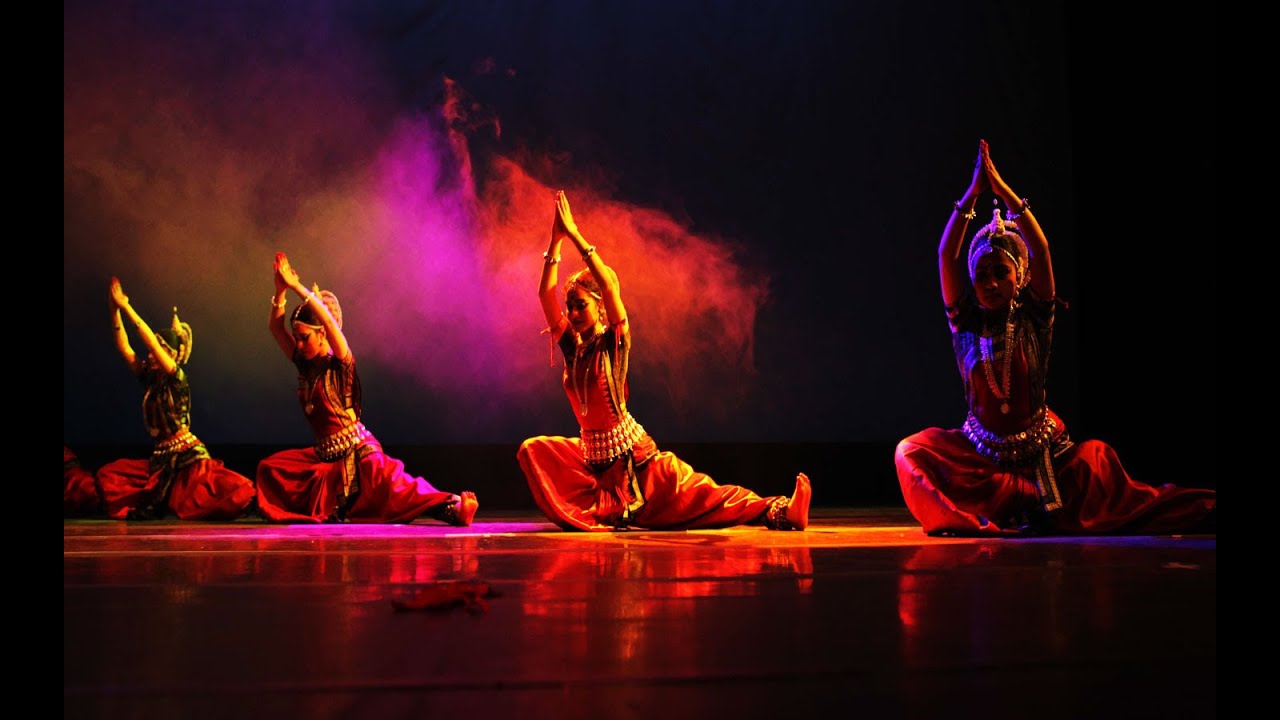
Indian Classical Dance possesses just as much visual beauty and significance as movement within its repertoire. Costumes, ornamentation, and makeup in Indian classical dance are much more than just adornments to beautify dancers; rather, they are an essential part of the visual communication that takes place on stage.
One of the most distinctive costumes in Indian classical dance is that of Bharatanatyam. In most cases, the dancers wear a specially designed silk sari with South Indian designs, usually in bright colors such as red, green, and blue with gold borders that are folded and pleated to form a fan-like design on the front.
In the old days, the dancers’ hair would be tied in a plait adorned with beautiful flowers and temple jewelry. The dancers adorn themselves with golden temple jewelry that includes a range of accessories such as heavy and beautiful headpieces, earrings, necklaces, wristlets, and waistlets that reflect the traditions of South India.
The feet are ornamented with ankle decorations called Ghungroos, while the hands, face, and feet receive designs using Alta (red dye used to highlight hand movements and footwork). Lastly, Bharatanatyam makeup includes large and prominent eyes with black eyeliner extending far past the outer corners, heavy brows, and a Bindi (traditional forehead decoration) with South Indian designs.
The costume of Kathak dance is a representation of its unique combination of Hindu and Mughal culture. For female Kathak performers, there are generally two costumes that they use, namely the lehenga choli, which is the skirt and blouse set, in case of a Kathak costume influenced more by the Hindu culture, or the Anarkali Suit, which is a loose tunic over churidar pants, in case of influence by the Mughal culture.
The most important part of the Kathak costume is called the Ghungroo, which are the ankle bells used by Kathak dancers, and these may contain up to 200 small bells each to make the distinctive ring sound.
One of the aspects of Kathakali makeup that warrants close scrutiny is its significance as one of the most unique theatrical makeup forms in the world. As mentioned before, Kathakali employs a color-coded method of makeup that converts the actors’ faces into masks representing the specific type of characters they play.
This involves a process that takes up to three or four hours by skilled makeup artists using only natural colors and the Chutti, a special kind of whitish paste made from lime. Makeup is first applied on the face in layers of color (green, black-red, black, and white for various character roles).
This makeup is applied in several layers to provide for dramatic 3D contours around the face. Eye drops are used to make eyes bigger, while the black eye pencil gives dramatic emphasis to the eyes.
The jewelry worn by Odissi dancers and the costumes in general can be described by the special importance attached to their link with Odishan temple sculptures. The jewelry worn by Odissi dancers is made according to the Odishan silver filigree craft technique, a delicate form of jewelry that looks very similar to the jewelry worn by sculpted characters in such world-famous temples as Konark and Bhubaneswar.
Such an intentional link between the live dancer and the sculpted deity creates a feeling that the dancer actually incarnates the divine being sculptured in the stones.
It is worth saying that all classical Indian dance forms share an approach to performing preparations. In particular, getting ready to perform can be considered a sacred ritual in its own right, when the performers spiritually get ready to play the role of divinity. In many cases, classical dances start with prayers and rituals of offering flowers and sweets to the gods.