Think for just a second. Remember the flashing lights of a crowded dance club? Remember the sizzling sounds of the boombox in the park? Remember how everyone goes absolutely nuts when the song plays, losing themselves in the melody? That is the power of 90s dance songs, and many years after that, nothing could have broken their hold on us.
The 90s were a great era for dance music. From the powerful synths of Eurodance to the soulful tunes of R&B, from the hits that became a staple of every gathering to the songs of pop boy and girl groups making them into international stars – this period saw the creation of such a wide range of dance music that even today it still rules all over the world – at parties, wedding receptions, workouts, and retro dance nights.
This ultimate guide will introduce you to the world of 90s dance songs, including their unique features, greatest hits, key artists of the time, one-season wonders, and much more!
The Golden Era of Dance Music: What Made the 90s Special?

The importance of the dance songs of the 1990s cannot be fully appreciated without first comprehending the distinct set of circumstances that made them so special. The 1990s were not just an excellent time to produce dance songs; they were the best of times, when everything came together to produce exceptional music.
The impact of technology on music creation was tremendous. It was in the late 1980s and early 1990s when cheap music-making equipment emerged. Synthesizers, drum machines, samplers, and digital audio workstations were available to a new generation of artists, who immediately took advantage of this development. Now, producers could build whole musical universes from within their studios using synthesized sounds, drum rhythms, and samples. As a result, a completely new sound environment appeared that was perfectly suited for dancing to.
Club culture reached mainstream status. Although underground dance music scenes had flourished during the 1980s in cities such as Chicago, Detroit, New York, and Manchester, the 1990s were marked by the explosion of club culture into the mainstream arena. Supercabarets sprang up all over the globe, DJ culture took hold globally, and the notion of clubbing was at the center of youth culture worldwide. The desire for good dance music had never been greater – and the industry delivered big time.
The MTV channel created star dancers. With the emergence of music TV in the 1990s, there was a complete transformation in the way people viewed dance and music together. Not only did they need a great track to go along with, but they also required even better dance and movements to accompany their songs. In other words, choreography was an important aspect of defining a pop star. And, it is no surprise that some of the greatest stars during the decade were people like Janet Jackson, Usher, or even the Backstreet Boys.
The barriers between genres were broken down. What was thrilling about 90s dance music was its ability to break down the barriers between genres. Hip-hop artists used samples from soul and funk tracks. The Eurodance artists mixed house music with pop vocals and reggae beats. R&B artists borrowed from new jack swing, gospel, and electronic sounds. Latin beats entered mainstream music. It produced a decade of music that was both diverse and coherent, sufficiently diverse to keep one’s attention, yet accessible to appeal to everyone.
The energy just cannot be matched. Above all, there was an energy that was intangible but very distinct when you listened to the music of that era. The positivity and even the joy that came along with it were all evident in the music created during that decade. Whenever someone listens to any iconic track from that era and gets instantly flooded by waves of happiness and energy, then there’s nothing fake about it.
Top 90s Dance Songs You Need on Your Playlist

Let us get into the music itself. These are the essential 90s dance songs, the tracks that defined the decade, and absolutely belong on any serious throwback playlist.
Best Eurodance Songs of the 90s
The genre of eurodance might be considered one of the key ones when talking about 90s’ music with energetic beats, catchy synth melodies, pop vocals, and an incredible amount of positive energy. Eurodance made waves all across Europe and took the world’s club scene by storm.
One of the examples of songs in pure eurodance style is undoubtedly “Rhythm of the Night” by the artist named Corona in the year of 1993. The second tune is “What Is Love?” sung by the same artist named Haddaway in 1993; it became one of the key hits of the whole decade with its pulsating beats and unique vocals. Finally, “Cotton Eye Joe” by the group Rednex, dated back to 1994, managed to unite elements of both eurodance and country-style tunes, creating something really unforgettable.
“Aqua” by Aqua (1997) was the bubblegum Eurodance hit song that sold millions globally and caused meaningful cultural discussion. On the other hand, “Blue (Da Ba Dee)” by Eiffel 65 (1998) came late into the decade, causing a huge stir due to its futuristic nature and hook that made it one of the most streamable songs of the decade. In addition, “Freed From Desire” by Gala (1997) and “Boom Boom Boom” by the Vengaboys (1998) completed the decade on an anthemic high note.
Best Hip-Hop Dance Hits of the 90s
The 1990s were the time of hip-hop, and this music gave rise to some of the most powerful floor fillers in all of music history.” Gonna Make You Sweat (Everybody Dance Now)” by C+C Music Factory (1990) is known as the song that kicked off the entire decade with such a big bang. Kris Kross’s “Jump” (1992) featured a hook so catchy and a beat so infectious that people could not resist dancing to it. “Whoomp! (There It Is)” by Tag Team (1993) was the summer hit of the year, selling thousands of copies.
“Informer” by Snow (1992) introduced reggae-influenced hip-hop, while “Doin’ It” by LL Cool J (1996) and “Get Jiggy Wit It” by Will Smith (1997) dominated the first half of the decade in terms of popular dance hits. The Beastie Boys’ “Intergalactic” (1998) added a bit of novelty to mainstream dance music and was a huge hit on all the dance floors of the country.
Best Pop Dance Songs of the 90s
In the 1990s, pop music and dance music went hand-in-hand, resulting in an incredible series of hits that were both commercially successful and great for dancing.
With “Baby One More Time,” Britney Spears came to prominence as one of the stars of the decade, with a catchy beat and hook that quickly took the world by storm. The Spice Girls’ hit “Wannabe” (1996) was one of the best-selling singles of all time and is still one of the happiest, most energetic pop dances ever made. The Backstreet Boys ended the decade with the perfect pop dance hit, “I Want It That Way.”
Los Del Rio’s song and dance craze “Macarena” (1995) became not only a hit single but one of the most recognizable dances of all time, performed by everyone around the world. Hanson’s “MMMBop” added the sweetest, most addictive sugar rush to pop dance music in 1997, followed by NSYNC’s phenomenal “Tearin’ Up My Heart” in 1997.
Best R&B Dance Hits of the 90s
The music style of R&B in the nineties was something special, featuring soulful voices, elegant sound effects, and incredible rhythms. “No Scrubs” performed by TLC was released in 1999, and it was more than just a song; this was a phenomenon of that time. “Waterfalls” (1995) by TLC had both strong emotions and an amazing rhythm that could not help but appeal to the listeners. “I Will Always Love You” by Whitney Houston was released in 1992, and its sound effect is among the best from that time. “Fantasy” by Mariah Carey from 1995 included the sampling by Tom Tom Club.
“U Make Me Wanna” by Usher in 1997 and “Nice & Slow” by the same artist, but already in 1998, helped the young performer become one of the brightest stars of that decade. The combination of beautiful vocals and impressive choreography distinguished his songs from others in the style of R&B. The singer Erykah Badu released her song called “On & On” in 1997 and added neo-soul sophistication to it. “Doo Wop (That Thing)” by Lauryn Hill was a great way to finish the nineties’ decade of R&B music.
Iconic 90s Dance Artists Who Defined the Decade

Every dance hit comes from a superstar, and the 1990s have brought out a great number of these superstars who continue to influence modern music. The 90s saw a number of these stars emerge, and these were not only musicians with great hits, but stars who made the decade famous for them.
The Backstreet Boys and NSYNC — Boy Bands That Ruled
For an understanding of the cultural significance of dance music in the 1990s, one cannot ignore the influence of boy bands. There is probably no better example of the fusion of dance music and boy bands than the duopoly of the Backstreet Boys and NSYNC.
The Backstreet Boys were a musical phenomenon, becoming one of the best-selling artists in history. The unique vocal arrangement and harmonization, accompanied by high-quality choreography, combined with catchy pop songs, resulted in instant success. The hits “Everybody (Backstreet’s Back)”, “I Want It That Way,” and “Larger Than Life” not only became popular but were also prepared as musical events, with their choreographic elements captured on music videos viewed and repeated by millions.
The NSYNC group did not fall behind their competitors, complementing the quality of the musical performance with the exceptional vocal talent of Justin Timberlake. The songs “Bye Bye Bye”, “Tearin’ Up My Heart,” and “It’s Gonna Be Me” were pure dance music, with impeccable sound design and choreography. In addition, NSYNC managed to achieve popularity among listeners who preferred alternative rock.
Spice Girls — Girl Power on the Dance Floor
The Spice Girls burst onto the world music scene in 1996 with their single, “Wannabe,” but they brought with them much more than another hit song – they introduced a cultural phenomenon. Not only was Girl Power an ideology, it truly represented something that was happening in the hearts of a generation of young girls and women who identified with the distinct characters of Scary, Sporty, Baby, Ginger, and Posh Spice.
From a musical perspective, the Spice Girls created a series of bubblegum hits with a decidedly dance-pop twist. These tracks included “Say You’ll Be There,” “2 Become 1,” “Spice Up Your Life,” and “Wannabe.” Each track is a classic dance floor tune, so flawlessly made for communal pleasure that it lights up the dance floor even today. The Spice Girls were the highest-selling female musical act of all time.
Ricky Martin — Latin Rhythms Take Over
One of the greatest pop cultural moments of the 90s involved Ricky Martin and his performance of “La Copa de la Vida” at the Grammy Awards in 1999. The energy that Ricky Martin brought out on stage during his performance of this song made it one of the best live concerts ever to have been performed at the Grammys; the performance also marked a milestone in crossover musical history.
“Livin’ La Vida Loca” became an iconic hit and the song of the summer in 1999, and it was this fusion of different genres, such as Latin music, rock music, and pop music in this song that helped introduce people to Latin music. Ricky Martin’s music helped open doors for other Latin artists such as Marc Anthony, Jennifer Lopez, and Enrique Iglesias to crossover to mainstream success.
In addition, Ricky Martin’s music brought something to the party that had not been seen before, and this was dance. The rhythm of his music, drawing influences from salsa, merengue, and cumbia music, added a new twist to the 90s music culture.
TLC — R&B Queens of the 90s
TLC, featuring the talents of Tionne “T-Boz” Watkins, Lisa “Left Eye” Lopes, and Rozonda “Chilli” Thomas, was not only the most successful girl band of the 1990s but also one of the most influential and culturally impactful groups of the whole decade.
What makes the works of TLC so unique is the combination of the versatility of their musical style and their ability to raise vital topics in their songs. While “Waterfalls” dealt with the issues of AIDS and drug abuse in an unprecedented manner, “No Scrubs” became a sarcastic and witty rejection of all those men who had nothing to offer to a romantic relationship.
Nevertheless, TLC remains a group primarily oriented towards dancing with songs that require some serious physical activity on behalf of listeners. Their ability to combine the elements of new jack swing, R&B, and hip-hop in their music resulted in the emergence of dance hits, while TLC’s choreographies have become a benchmark for other performers in the genre.
Ace of Base — Eurodance Goes Global
The Swedish band Ace of Base was one of the originators of the Eurodance music genre, and one of the most successful European artists who made their way into international mainstream pop music in the ’90s. Their first record, Happy Nation (titled The Sign in North America), was among the bestselling debuts of all time, helped by hit after hit of catchy, reggae-tinged synth pop tunes.
“The Sign,” “All That She Wants,” “Don’t Turn Around,” and “Beautiful Life” are all examples of international mega-hits that epitomize Eurodance in the ’90s — bright and melodic songs featuring dance hall reggae beats, melodic synth lines, and airy pop vocals. The upbeat mood of Ace of Base’s music is perfect for the spirit of early ’90s dance music, and the band has left an indelible imprint on the evolution of the Eurodance genre. Listen to any pop dance act of that period and onwards, and you’ll notice similarities to Ace of Base’s unique style.
The Best 90s One-Hit Wonders on the Dance Floor
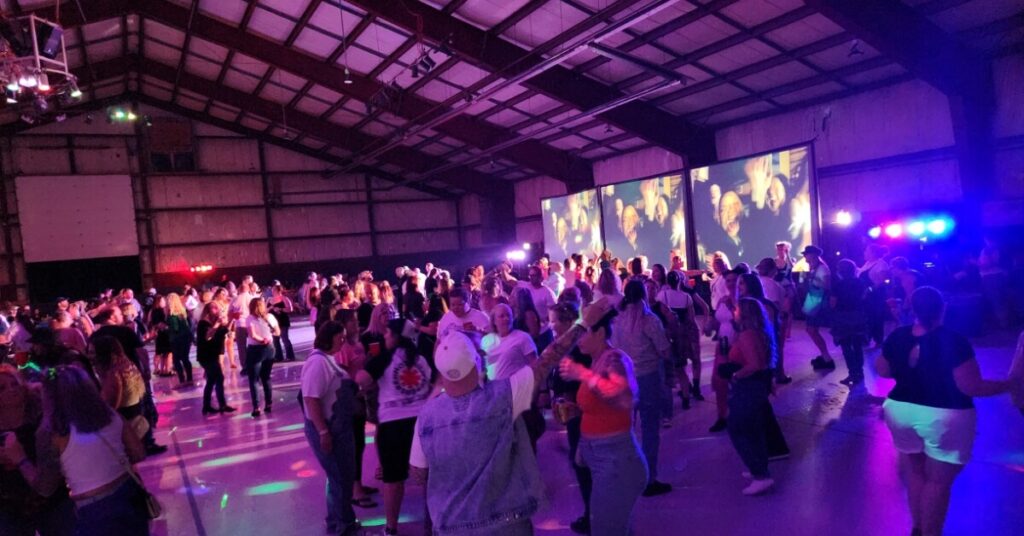
It is important to note that not all of the best dance songs from the 90s were produced by famous artists. There were several musicians whose careers took off during that time and faded away soon after. The music that they created is still remembered and enjoyed today, even if their careers did not last very long.
“Lou Bega’s ‘Mambo No. 5′” from 1999 was an undeniably enjoyable Latin-pop tune, which turned out to be the ultimate anthem of the summer and is even today one of the most popular songs ever. “‘Who Let the Dogs Out?'” by Baha Men from 2000 came at the closing days of the 90s vibe, but definitely made its presence felt with a very popular party song.
The song “Tubthumping” by Chumbawamba in 1997 was an infectious, punk-pop song with lyrics that were easy to sing along to. Apart from the song “Mambo No. 5,” no other song embodied the joy and freedom of the 90s dance parties like “Lovefool” by The Cardigans in 1996. This song had a beautiful tune that seemed almost unjustified.
“Vanilla Ice” (1990) by Vanilla Ice started the decade with one of the catchiest bass lines in popular music history and taught an entire generation that hip hop and dance music were not mutually exclusive genres. “Fly” (1997) by Sugar Ray added some sunshine into the alternative pop genre with its laidback vibe. Finally, “How Bizarre” by OMC (1996) gave listeners the greatest surprise hit of the decade, which was catchy for all the right reasons.
One hit wonders remind us that great dance music need not necessarily have longevity in their career and be an artist of celebrity stature. It only requires one hit at the right time.
90s Dance Songs by Genre: A Complete Breakdown
The 1990s were a period of great diversity in music, and this was reflected in the genre of dance music. The following is an overview of all the major types of dance music from the 1990s.
Eurodance and Euro Pop Hits
The sound that most clearly defined the sound of 90s dance music to a worldwide audience was Eurodance. Fast-paced and reliant on synthesizer production, Eurodance is defined by quick tempos (usually between 120-160 BPM), easy-to-memorize melodic hooks, the use of both rapped verses and sung choruses, and an irresistible feeling of positivity.
Originating in Germany, Sweden, and the Netherlands during the late 1980s and taking off globally during the early 1990s, Eurodance had chart success all over Europe, along with making serious inroads into North America and the international market. Notable acts include Corona, Haddaway, Aqua, Ace of Base, Vengaboys, 2 Unlimited, Snap!, Culture Beat, and countless others. The impact of Eurodance on pop music was profound; its formula of catchy hooks, upbeat rhythms, and simplistic lyrical themes was copied in popular music dance songs for decades to come.
House and Techno Anthems
As the popularity of Eurodance soared in mainstream pop music, there was a parallel universe of music in the clubs consisting of house and techno, which set the trends for decades ahead.
The genre of house music, invented in Chicago during the early 1980s, achieved its pinnacle in the 1990s through acts such as Daft Punk, Faithless, Basement Jaxx, The Chemical Brothers, and Prodigy, who produced highly complex forms of electronic dance music for millions of fans around the world. “Around the World” by Daft Punk (1997), “Insomnia” by Faithless (1995), and “Firestarter” by Prodigy (1996) were iconic examples of this music, using a combination of powerful electronic sounds with catchy lyrics that created some of the best songs ever written for the dance floor.
Techno music, with its harsher and more complex sound, existed primarily in an underground world but heavily influenced the production style and aesthetics throughout the decade. Raves – which were youth parties based on house and techno music in the early 1990s – constituted one of the key youth movements of the period.
Hip-Hop and Rap Dance Tracks
Undoubtedly, the 1990s were the golden years of hip-hop, and the influence of hip-hop on dance music in that decade was enormous. Hip-hop beats produced in the 90s were highly creative and sophisticated, with producers like Dr. Dre, Timbaland, Missy Elliott, Puff Daddy, and The Neptunes creating beats that were highly complex and full of groove.
There were numerous examples of dance tracks by artists within the hip-hop scene. There were some dance tracks in the hard-core style, such as those of Notorious B.I.G., Jay-Z; there were also the more relaxed tracks produced in the West Coast, such as those of Snoop Dogg and Warren G. In addition to the above two categories, other examples include the southern-style dance tracks of artists like OutKast and Goodie Mob. There were also the crossover songs of artists like Will Smith and MC Hammer.
R&B Slow Jams That Still Make You Move
It would be a mistake to assume that all forms of dance music in the 1990s relied on fast-paced beats. Indeed, R&B slow jams – songs characterized by a seductive sound, romantic lyrics, soulful vocals, and laid-back tempo – became a vital component of the era’s dance music scene and a natural fit for more leisurely moments at the clubs.
Boyz II Men, Brian McKnight, Babyface, Toni Braxton, and Maxwell are only some of the artists responsible for some of the greatest slow jams ever composed. “End of the Road” by Boyz II Men became an instant classic, spending an astonishing 13 weeks at the #1 spot on the Billboard Hot 100. Another example worth mentioning is “Un-Break My Heart” by Toni Braxton, which took the #1 position based on sheer emotional impact and brilliant production.
Although these tracks did not have fast-paced rhythms, their significance in the history of 90s dance music cannot be underestimated.
Latin Dance Hits of the 90s
During the 1990s, there was an eruption of Latin music within the mainstream global market, commonly referred to as the “Latin Explosion.” The dance effect created by Latin music during this period was tremendous.
The list of artists behind the creation of Latin music included Ricky Martin, Marc Anthony, Jennifer Lopez, Shakira, Enrique Iglesias, and Gloria Estefan, among many others. This group of artists introduced rhythms such as salsa, merengue, cumbia, and reggaeton to the masses, which had never experienced anything similar before. This type of music was meant for dancing because of its complicated yet syncopated rhythms and melodic nature.
“La Macarena” by Los Del Río became one of the most sold single albums in history. The song created a line dance which was adopted across the entire world. “Livin’ La Vida Loca” by Ricky Martin, “If You Had My Love” by Jennifer Lopez, and “Bailamos” by Enrique Iglesias are some examples of songs that characterized dance music at the end of the 90s.
How 90s Dance Songs Influenced Today’s Music
If you believe that dance music from the 90s era was nothing but a nostalgia for your past, then you couldn’t be more wrong. The effect that dance music from the best of the 90s has had on the current era of dance music continues to have a wide and ever-increasing impact.
Music sampling has continued to keep music from the 90s era alive in both pop and hip-hop music. Many producers continue to look back at music from this era when creating new samples and using those samples in their own music. Music from the 90s has had an especially strong influence on R&B music and producers from the genre because of its analog qualities that are hard to recreate with digital music creation software. The next time you listen to a Cardi B song that samples an old beat, it may very well be from the 90s era.
The phenomenon of the nostalgic 90s is raging through mainstream culture. All aspects of popular culture — fashion, cinema, television, and music — have experienced the strong wave of 90s nostalgia in the past decade, and music is probably feeling it the most. Younger generations of listeners can stream the entire catalog of 90s music on streaming platforms right now, whereas older listeners are revisiting their favorite songs of their youth years with more respect. According to playlists’ statistics on Spotify and Apple Music, songs from the 90s receive more streams and saves compared to other nostalgic eras.
The structure of modern dance pop music hasn’t changed since the 90s. The basic principle of pop dance music of the 90s — catchy hook, danceable rhythm, emotional depth, and an engaging music video — is still considered the key formula for modern mainstream music production. Contemporary artists Dua Lipa, The Weeknd, Doja Cat, and Harry Styles have all borrowed elements from 90s dance pop aesthetics, producing some of the most successful tracks of the modern era.
The rise of EDM can be attributed entirely to the 90s decade. The worldwide phenomenon of electronic dance music, marked by superstar DJs, huge music festivals, and an industry worth a billion dollars, is based on the legacy that was created by 90s house and techno music. The sounds, styles, and even attitudes developed by such electronic music artists as Daft Punk, The Chemical Brothers, and Fatboy Slim were used later by other artists.
The dominance of Latin Music in Global Culture Started in the 90s. The Latin Explosion in the late 90s made impossible what was earlier thought to be improbable. Today, Latin music can be considered the dominant popular music around the world; the legacy of artists such as Ricky Martin, Shakira, and Jennifer Lopez paved the way for it.