There are some significant differences between Bharatanatyam and Kathak. These differences are discussed in more detail below. The purpose is not to determine: Bharatanatyam and Kathak which is better? but to appreciate the uniqueness of these traditions.
1. Origins and Regional Influence
Kathak is a dance form that finds its roots in Northern India. It gained its deserved projection from royal courts and royal ceremonies.
Bharatanatyam is believed to be born in Southern India. It started as devotional dance, performed in temples and religious gatherings.
2. Costumes: A Reflection of Tradition and Style
Kathak dancers used to adorn themselves with saris, and men used to wear dhotis in the beginning. As time passed, the use of lehenga and choli became common among women. Both these dresses allow free, unrestricted movement while contributing to the visual aspect of the dance.
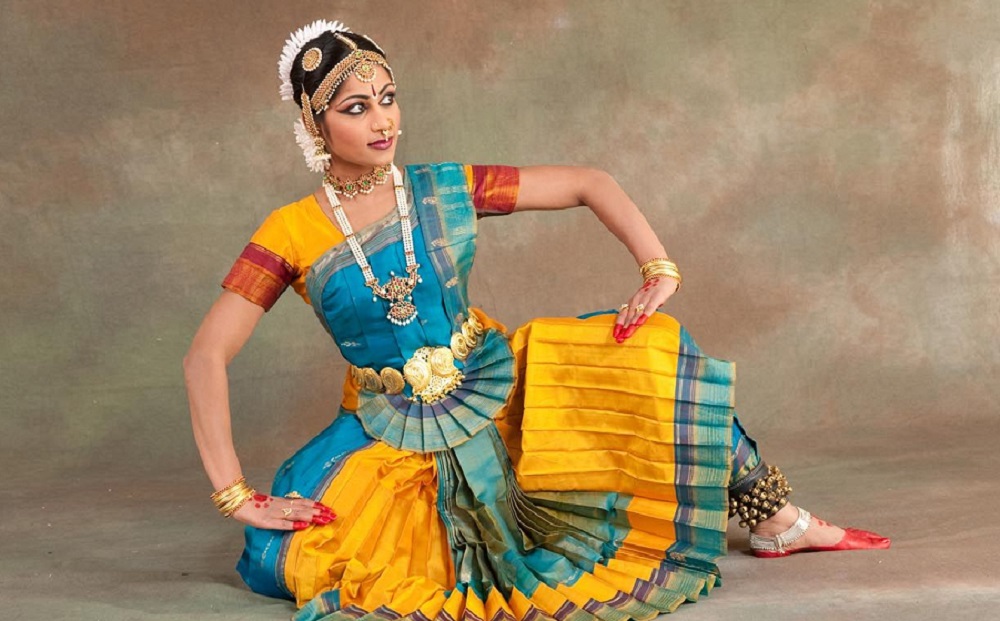
Bharatanatyam dancers wear saris, but there are many different variations of saris which dancers choose to wear, depending on their preference, sub-style, and performance.
3. Music and Rhythmic Accompaniment
Music is an integral part of both Bharatanatyam and Kathak dance.
In Kathak, the North Indian musical instruments such as tabla, sarangi, sitar, and ghungroo are used. These instruments are aligned in sync with the dancer’s steps to portray the enchanting display of movement and music.
Bharatanatyam uses South Indian musical instruments such as veena, mridangam, violin, and nagaswaram. These instruments are vital for creating the environment and portraying the story that the dancer strives to perform.
4. Footwork: Precision vs. Speed
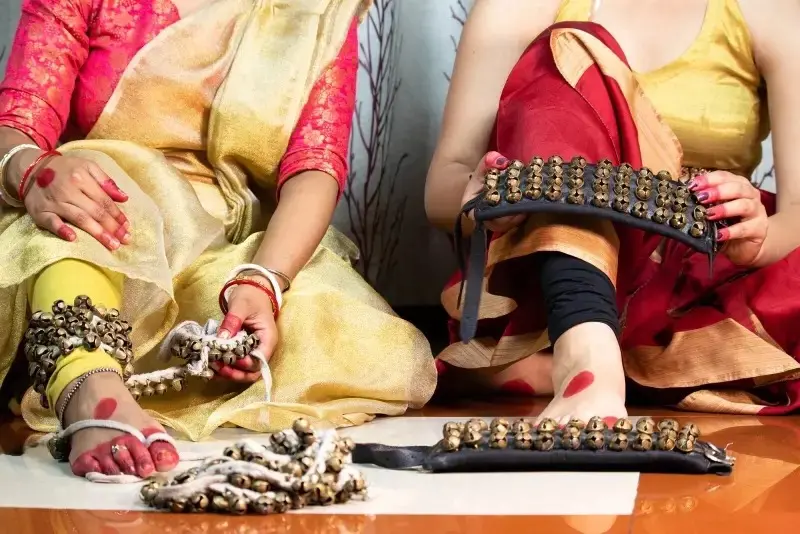
Footwork is a vital part of both these dancing traditions. Kathak is known to have faster and smoother footwork. The dancers wear ghungroos (footbells) which accentuate their movements. The epitome of Kathak dance is the rapid turn (chakkars) and complex rhythmic sequences delivered with breathtaking speed and control.
Footwork in Bharatanatyam is precise and controlled. The dancer strikes the ground in a sequenced pattern that aligns perfectly with tala. The synchronized footwork and beat of mridangam combine to produce a mesmerizing sight and sound.
5. Hand Gestures (Mudras) and Storytelling Techniques
In Kathak, hand movements accompany spins, glances, and dramatic expressions. Kathak dance is mostly improvisational and conversational. Unlike Bharatanatyam, there are no fixed hand gestures.
Bharatanatyam has mudras (hand gestures) and abhinaya (facial gestures). These are the tools that help the dancers narrate the story effectively.
6. Posture and Body Movements
Kathak dance tradition is known for having a straighter posture. This allows the dancer freedom to improvise and move across the stage. The circular movements, intricate turns, and graceful bends all combine to give Kathak dance its signature essence.
On the other hand, Bharatanatyam is famous for its half-sitting stance (aramandi). This stance is characterized by the outward bending of knees and a straight back. This makes the dancer more precise and grounded.
7. Speed and Dynamics of Performance
The gradual increase of speed from slow to moderate to fast is a special feature of Kathak dance. The dancer, using different speeds, creates a rhythm that resembles a conversational performance between the steps and the tabla.
Bharatanatyam progresses gradually, starting with invocatory pieces, followed by pure dance (nritta), expressive storytelling (abhinaya), and concluding with devotional sequences.
8. Themes and Storytelling Styles
The themes and storytelling of Kathak dancing tradition are a combination of royal and devotional. For example, the rasleela (the love between Krishna and Radha) is the devotional theme, while romance, playfulness, and storytelling are the essence that Kathak took from Mughal courts.
Bharatanatyam, which started as a devotional dance form, stays true to its spiritual and religious roots. It is based on love, devotion, and morality from Hindu scriptures. Descriptions and stories that revolve around Hindu gods and goddesses are an important aspect of Bharatanatyam.
9. Complexity and Learning Curve
Kathak dance, being more improvisational, gives breathing room for newcomers. But advancing into the intricacies and learning intricate turns and swift twirls is quite complex and requires years of practice and discipline.
Bharatanatyam dancing is very strict and rigid when it comes to building the base, hence it has gained the reputation of being very hard to learn. The dancer requires years of practice to master different aspects such as mudras, abhinaya, and complex footwork.
10. How to Identify Bharatanatyam and Kathak Easily
Difference between Bharatanatyam and Kathak are very obvious and notable.
To identify Kathak dance look for:
- Anarkali-style dresses/lehenga
To identify Bharatanatyam, look for:

 Address: 410 S Michigan Ave, Suite 528, Chicago IL 60605
  Email: info@mandalaarts.org
  Contact: 312.620.0096