Dance terms are the specific words and phrases used to describe movements, techniques, positions, and styles within different forms of dance. They serve as a universal language that allows dancers, instructors, and choreographers to communicate clearly and effectively. Whether you are learning ballet, hip-hop, or contemporary dance, understanding these terms helps you follow instructions accurately and perform with confidence.
Why Understanding Dance Terms Matters
Understanding dance terminology is essential for anyone who wants to improve their skills and feel more confident in a dance environment, especially when you understand the importance of dance in overall development. When you know the meaning behind each term, you can quickly grasp what your instructor is asking and execute movements with greater precision. This not only speeds up your learning process but also enhances your overall performance.
For beginners, learning dance terms builds a strong foundation. It reduces confusion during practice, helps you stay in sync with music and choreography, and allows you to communicate more effectively with others in a class or performance setting.
Basic Dance Terms Every Beginner Should Know
Tempo and Rhythm Terms
In dance, timing plays a crucial role, and this is where tempo and rhythm come into play. Tempo refers to the speed of the music, which can range from slow and controlled to fast and energetic. The beat is the basic unit of time in music, while rhythm refers to how those beats are arranged in a pattern. Rhythm refers to how those beats are arranged in a pattern, similar to concepts found in forms of Indian music.
Movement Terms
Movement terms describe the actions a dancer performs. A leap, for example, involves jumping from one foot to another, creating a sense of elevation and flow. A turn refers to rotating the body, often on one foot, while a slide involves gliding smoothly across the floor. Kicks, steps, and other basic movements form the building blocks of most dance routines. Understanding these terms helps dancers execute choreography with clarity and control.
Position and Direction Terms
Position and direction terms help dancers understand how to orient their bodies in space. Facing indicates the direction your body is turned, while moving on a diagonal means traveling at an angle rather than straight forward or sideways. Dancers also work with different levels, such as high, medium, and low, to add variety and dimension to their performance. Proper If you’re just starting, exploring different types of dance classes can help you apply these terms in real practice..
Common Ballet Dance Terms
Fundamental Ballet Positions
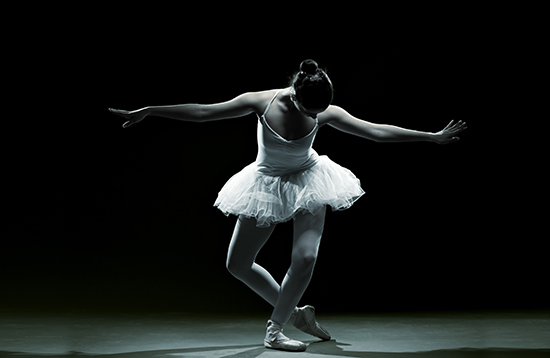
If you’re new, learning the benefits of ballet for adults can help you understand its value, and its foundation lies in the five basic positions of the feet. These positions involve specific placements, such as standing with heels together and toes turned outward or positioning one foot directly in front of the other. Each position builds stability, balance, and control, forming the basis for more advanced ballet movements.
Popular Ballet Moves
Ballet movements are elegant and precise, each with a specific name and technique. A plié involves bending the knees while maintaining proper posture, while a relevé requires rising onto the balls of the feet. A pirouette is a controlled turn on one foot, and an arabesque involves extending one leg behind the body in a graceful line. Movements like jeté, which is a leap from one foot to another, To practice these moves professionally by joining structured dance classes.
Hip-Hop and Street Dance Terms

Basic Hip-Hop Moves
Hip-hop dance is energetic, rhythmic, and deeply connected to music. Foundational movements such as the bounce and rock help dancers stay grounded in the beat, creating a natural groove. More stylized techniques like popping involve quick muscle contractions that create sharp, dynamic effects, while locking emphasizes holding a position momentarily to highlight a beat. Waves, on the other hand, create a fluid motion that travels through different parts of the body. These styles are often practiced in groups, making them ideal for dance team-building activities.
Freestyle and Groove Terms
One of the defining elements of hip-hop is freestyle, which allows dancers to improvise and express themselves without set choreography. Groove refers to the natural rhythm and flow a dancer develops while moving to music. In a cypher, dancers form a circle and take turns showcasing their skills, creating an interactive and supportive environment. Accents, often called hits, are used to emphasize specific beats, adding personality and style to the performance.
Contemporary and Modern Dance Terms
Key Techniques
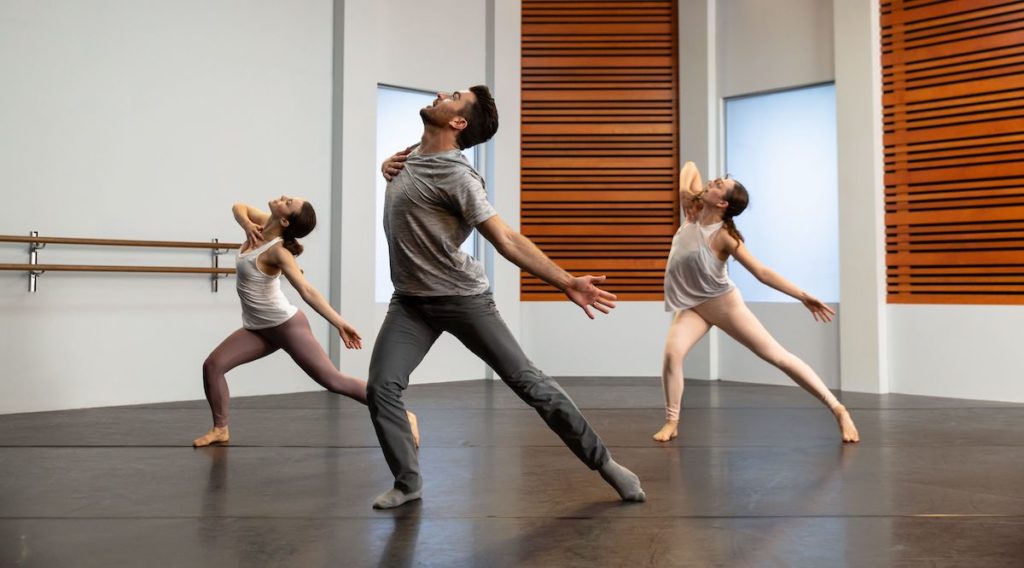
To understand this style deeper, read about what contemporary dance is in terms of technique and body awareness. Movements such as contraction involve tightening the core to create a strong, expressive shape, while release emphasizes letting go of tension to achieve fluidity. Techniques like fall and recovery explore balance and control by moving between stability and motion. Floor work is also a key element, incorporating movements performed on the ground to add depth and variation.
Expressive Elements
You can also explore the difference between lyrical and contemporary dance for better clarity. Dancers use dynamics to vary the speed and intensity of their movements, creating contrast and emotional impact. Flow connects movements seamlessly, allowing the dance to feel continuous and organic. Emotion plays a central role, as dancers use their bodies to tell stories and convey feelings. Improvisation further enhances creativity by encouraging spontaneous and authentic movement.
Dance Terms in Indian Classical Dance
In Indian classical styles, terminology plays an equally important role. Forms like Bharatanatyam and Kathak use specific gestures and expressions. You can also explore the history of Bharatanatyam or learn more about South Indian dance traditions.